
MIT
A portal for researchers and inventorsSCROLL DOWN
A BRIEF INTRO
Every day there are a vast amount of research and inventions being made at MIT. For the researchers/authors, there should be a way to disclose their inventions to MIT. This is where the TLO is introduced. A team in MIT that receives all the research and help the authors in registering and managing the admin side of their inventions.
THE PROBLEM, THE SOLUTION AND THE WHAT NEXT
The initial problem was split in two. Firstly, the process that researchers need to follow to disclose their inventions, and secondly
how can the administrators at MIT manage these disclosures.
The current solution at MIT was a dated web solution on both fronts that was confusing for both end- and admin users.
After a lot of discussion between MIT stakeholders, key researchers, and the MIT UX team, we decided the best approach for the end user is to move to a native approach
where the platform is available as an app on Apple, Android and Windows. For the admin users, the solution will move to Salesforce.
HOW I GOT STARTED
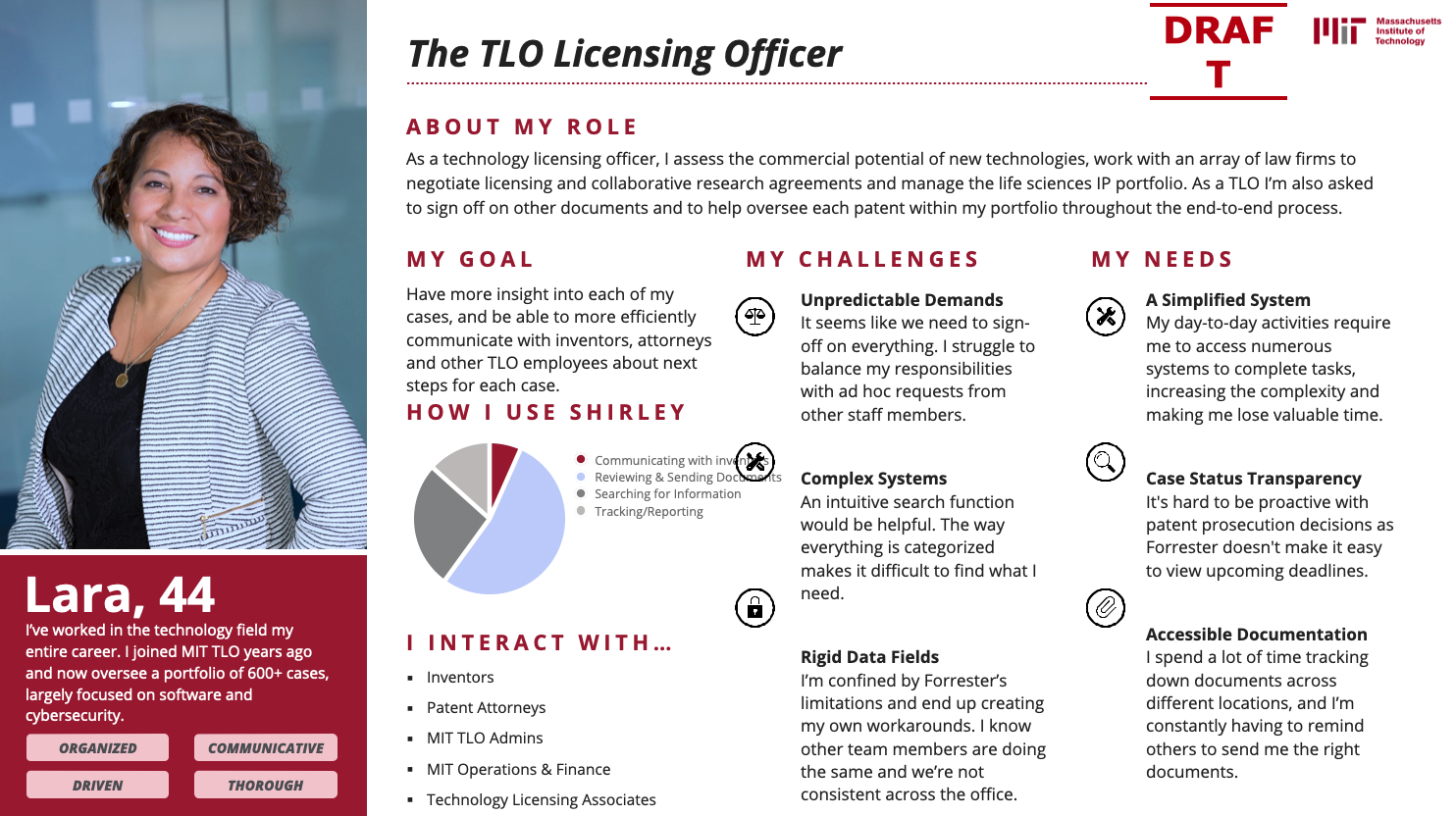
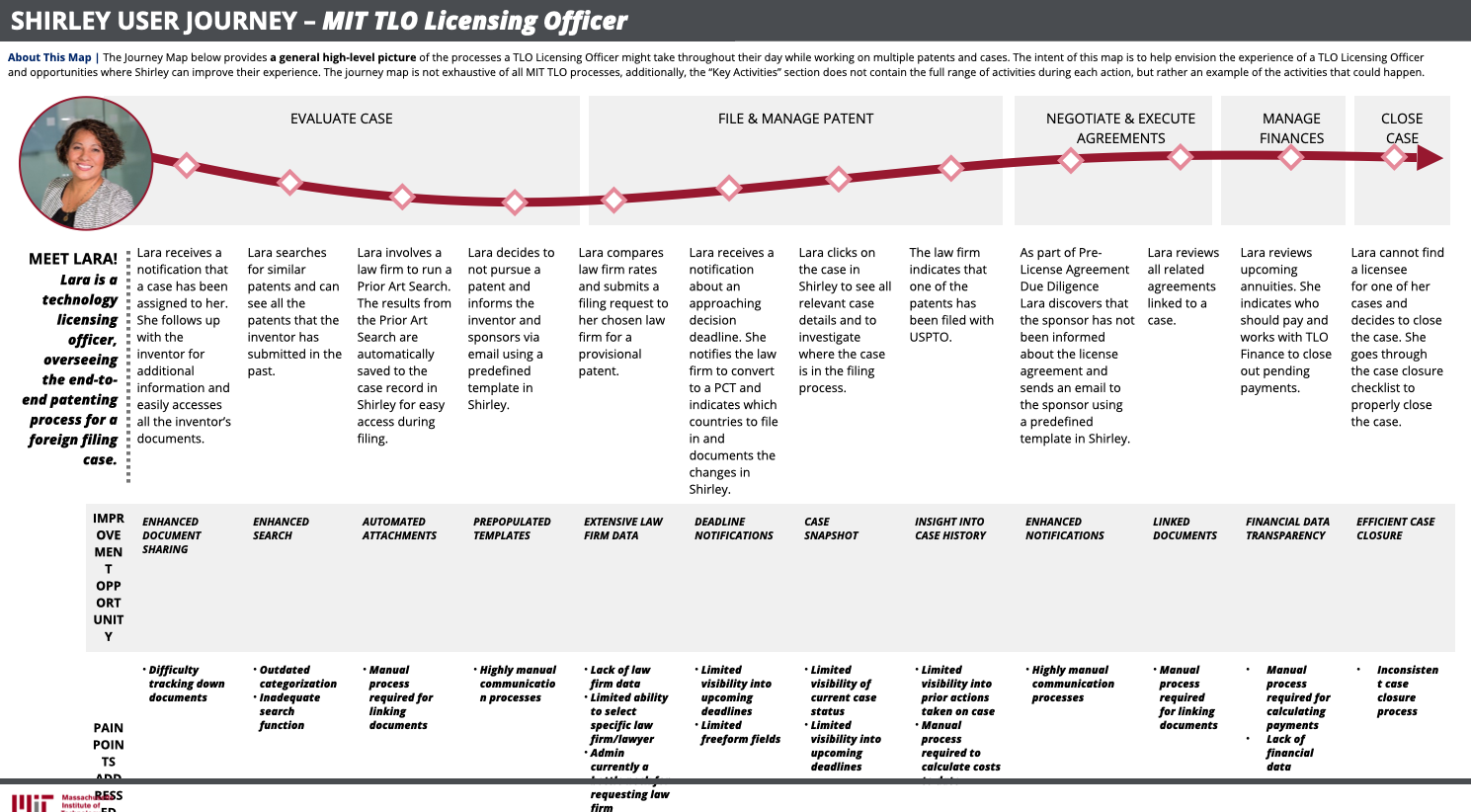
As a team of two designers I had three elements to start off with. Understanding who will be using the platforms, discussions with researchers and admin users to understand their pain points, and user journeys and task flows needed to be mapped out.
THE DESIGN PART
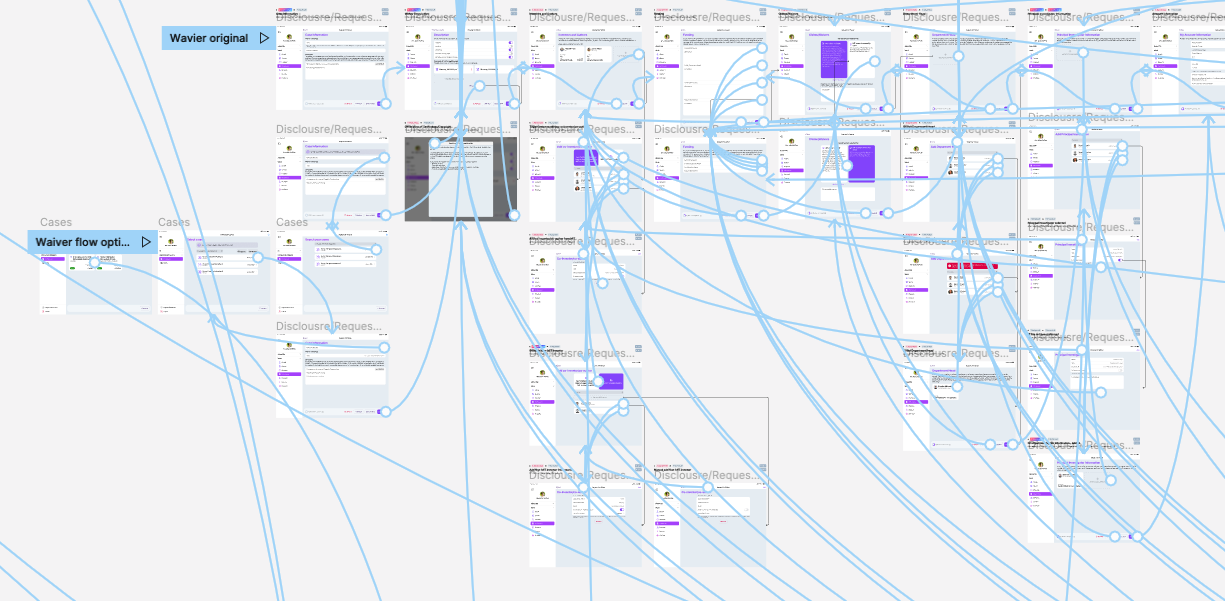
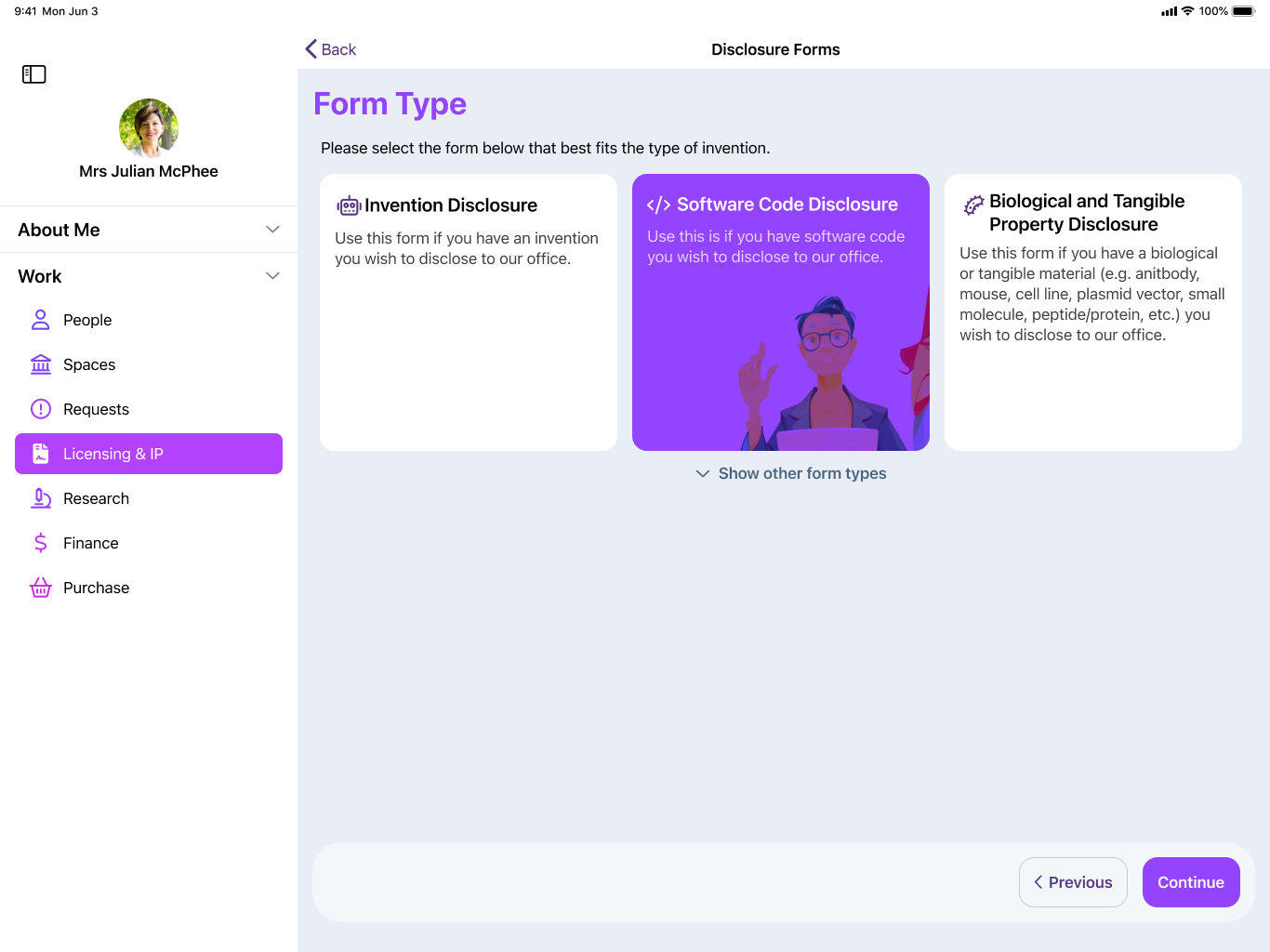
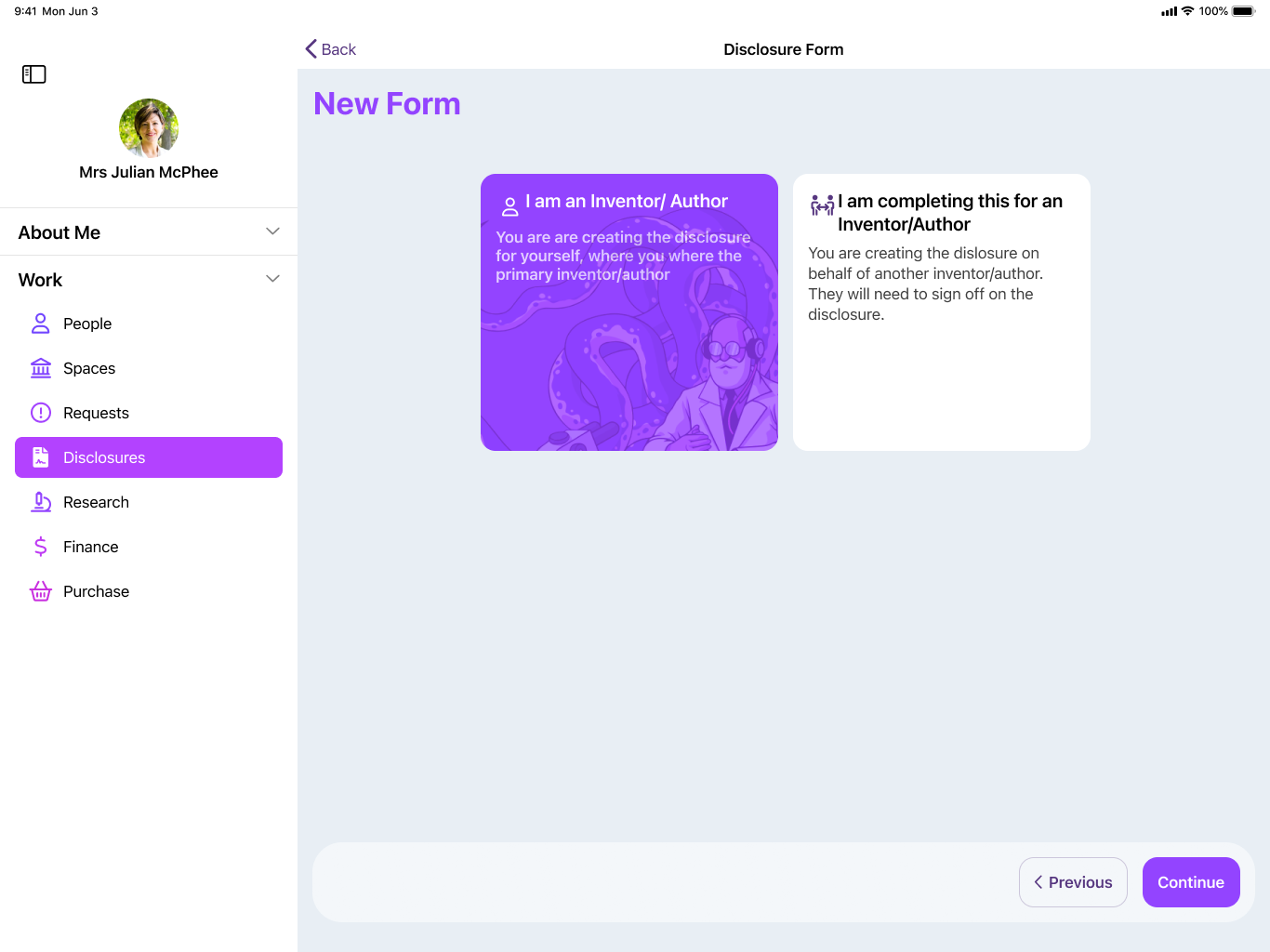
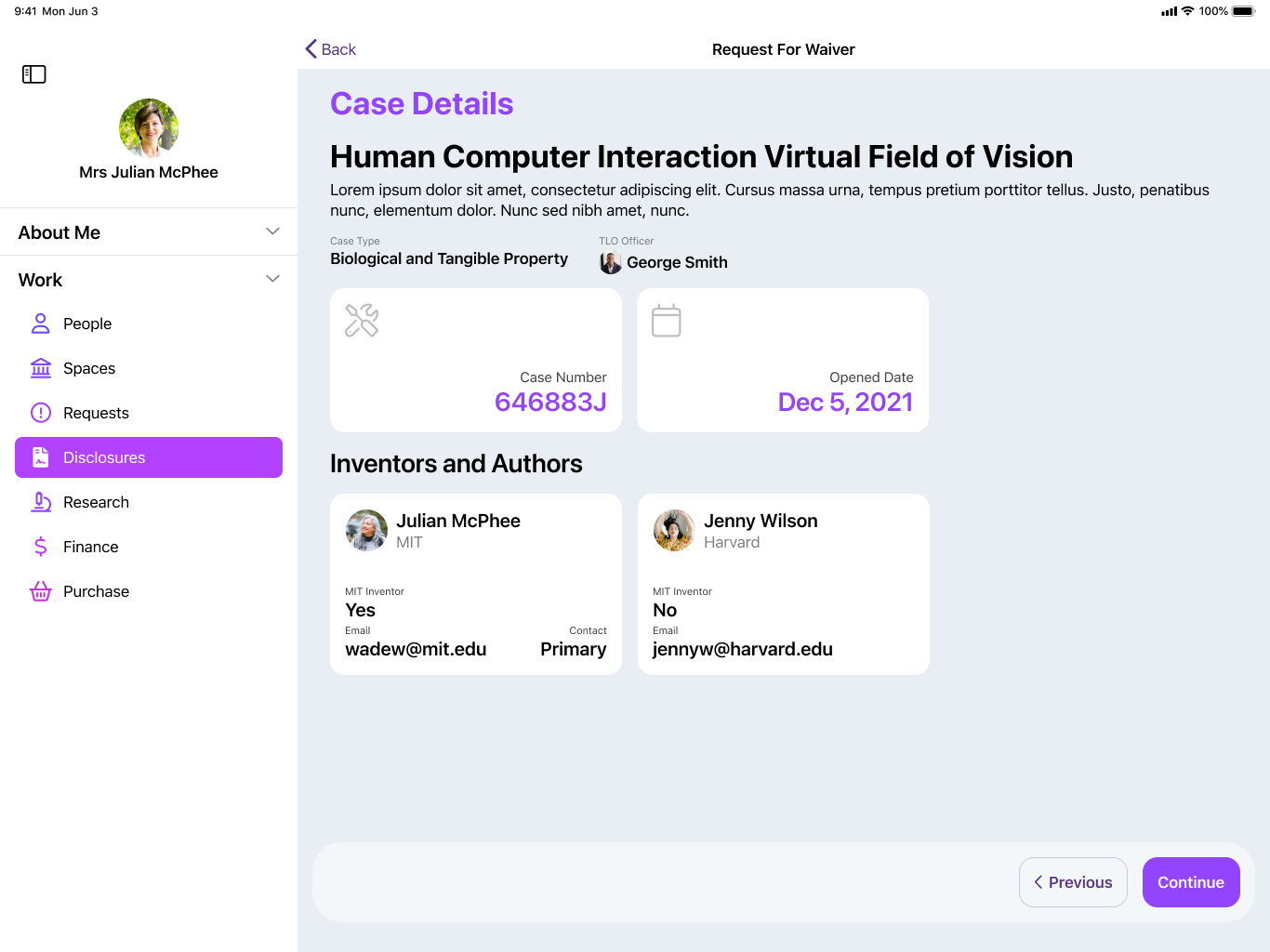
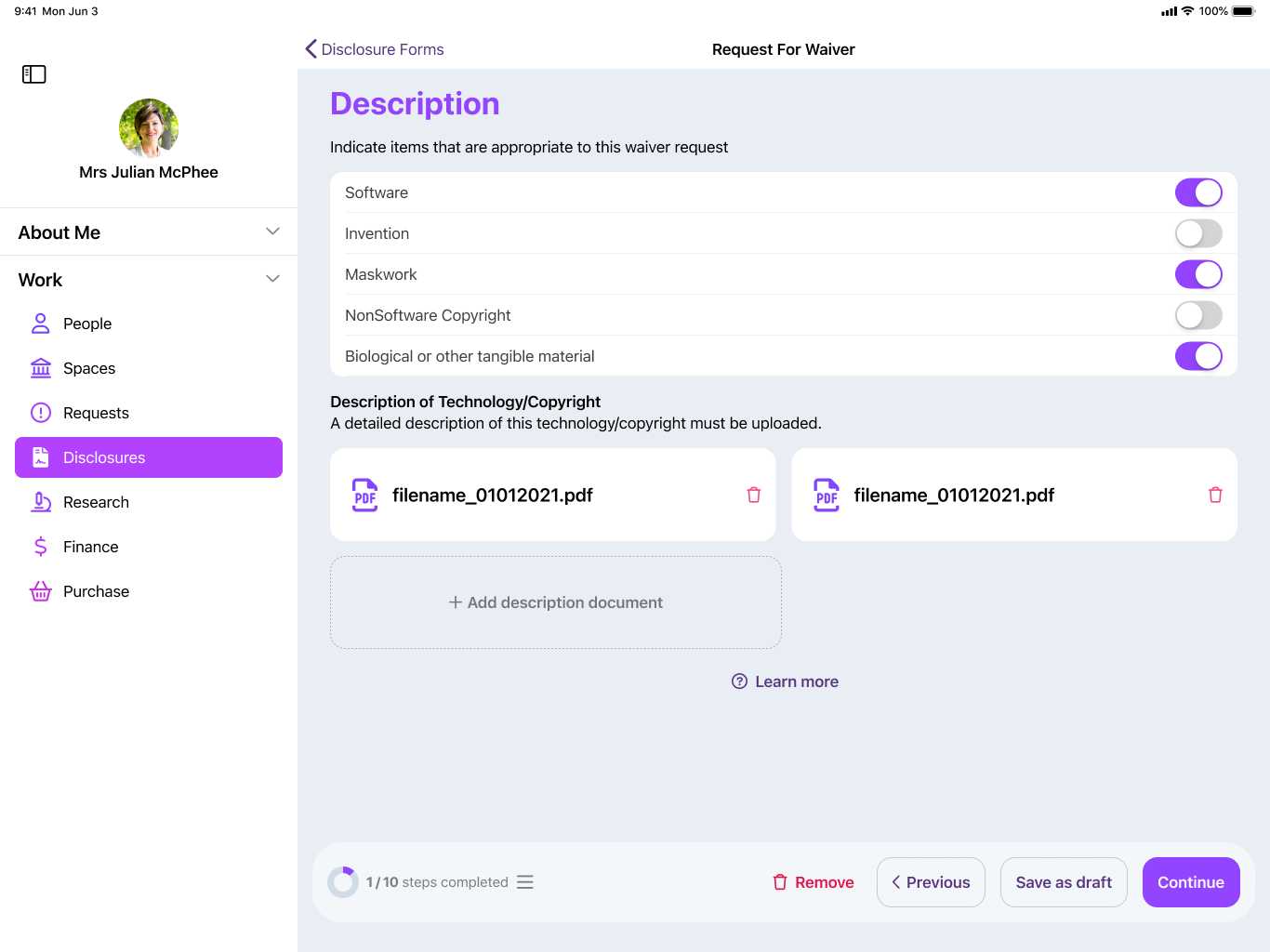
With understanding the problem and pain points of all stakeholders, I started the UI. After doing some rough sketches to get a
general idea of the approach, I moved on to low-fedility mockups and eventually high fedility mockups.
Designs were put into prototypes and presented to future users to validate that we are approaching the correct solutions. Based on feedback, I returned
to the designs and made amendments that reflected the feedback.
CONCLUSION
The new flow and native approach was met with great success. Some methods we used to measure success include the amount of queries that
were sent out for assistance in logging a disclosure. This went down by 68%. A secondary metric was pulling data to see how much of all new disclosures
contained the correct data and was completed in the correct manner. This has also improved substantially.
Even with the new approach in production, I continued with follow-up interviews of key users to understand if any requirements has evolved in using the
new approach
.png)
Danie Fourie | Copyright © 2024 | Proud South African